Thermal Comfort in SIP Buildings – It’s Not Just About Energy Bills

Constantin Tiseanu • 1 March 2026

Thermal Comfort in SIP Buildings – It’s Not Just About Energy Bills

Energy efficiency is important.

But thermal comfort is broader than heating costs.

When comparing SIP garden rooms and granny annexes, many discussions focus on U-values and running expenses. While these matter, they only tell part of the story.

True comfort is about how a space feels — not just how much it costs to heat.

What Is Thermal Comfort in a Garden Room or Granny Annexe?

Thermal comfort in a Structural Insulated Panel (SIP) building is created by a combination of:

  • Stable internal surface temperatures
  • Reduced cold spots
  • Controlled air movement
  • Lower condensation risk
  • Improved acoustic dampening

When the building envelope performs correctly, internal surfaces remain closer to room temperature. This reduces radiant discomfort — the sensation of feeling cold even when the air temperature is adequate.

That distinction is critical for year-round usability in North London, Hertfordshire and the surrounding counties.

Why Surface Temperature Matters

In lower-spec garden buildings, walls may be technically insulated — but internal surface temperatures can fluctuate significantly.

Cold internal surfaces can lead to:

  • Localised condensation
  • Discomfort near walls and glazing
  • Increased heating demand
  • Long-term moisture risks

A well-specified SIP structure provides continuous insulation and reduced thermal bridging, helping maintain consistent internal surface temperatures throughout winter.

Comfort becomes stable, not reactive.

Condensation Control and Indoor Stability

Thermal performance and airtightness work together to reduce condensation risk.

Stable temperatures and controlled air movement mean:

  • Reduced interstitial condensation risk
  • Improved moisture control
  • Better protection for internal finishes
  • Healthier indoor environments

This is particularly important in granny annexes designed for full-time residential occupation.

Condensation is not just a technical issue — it directly affects longevity and occupant wellbeing.

Acoustic Comfort in SIP Construction

Comfort is not only thermal.

The composite structure of SIP panels, combined with proper airtight detailing and internal linings, can contribute to:

  • Reduced external noise transmission
  • Improved acoustic dampening
  • A more controlled internal environment

This makes SIP buildings well suited for:

  • Home offices
  • Therapy rooms
  • Music rooms
  • Full residential living spaces

The envelope influences both thermal and acoustic stability.

From Garden Room to Engineered Living Space

When high-performance SIP panels are combined with:

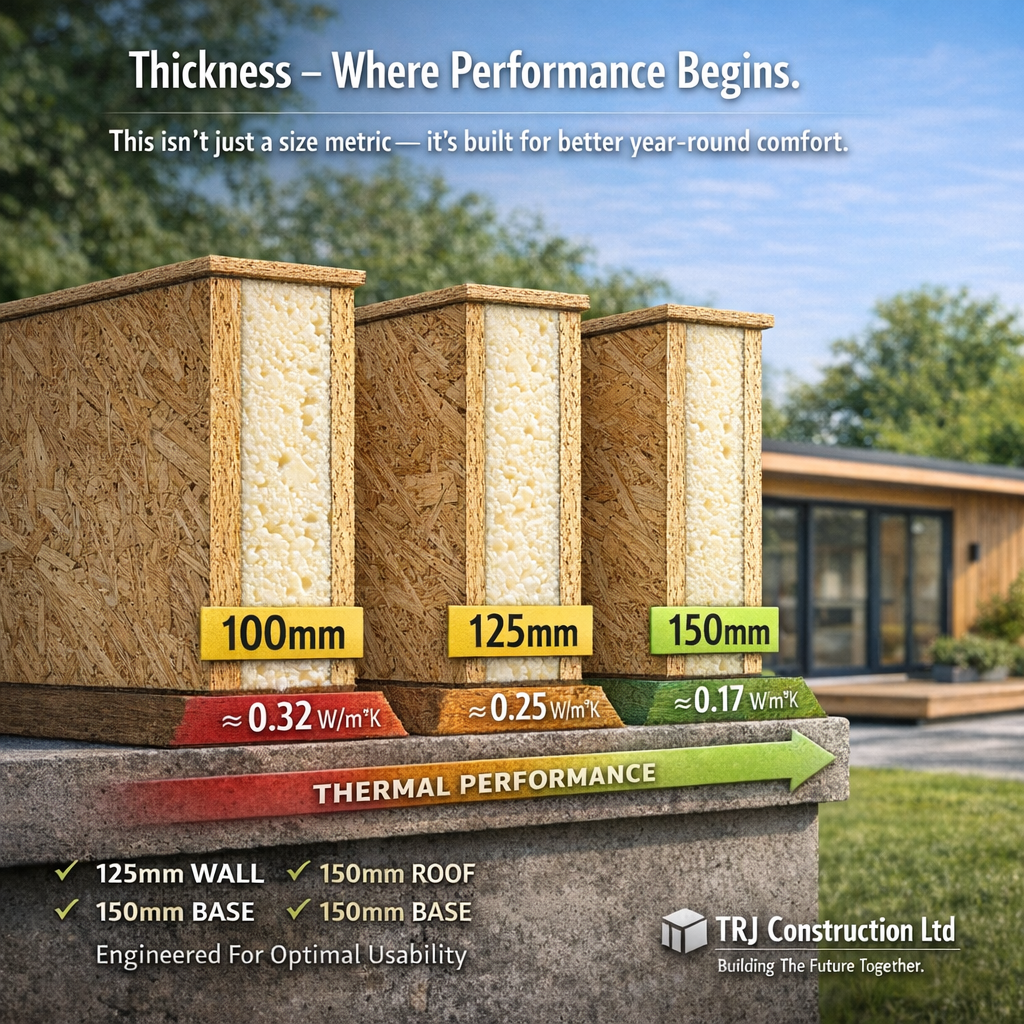
  • 125mm or 150mm structural wall systems
  • Insulated roof and base systems
  • Quality cladding (K-Render or premium composites)
  • Proper internal lining systems

The result is no longer simply a “garden room.”

It becomes an engineered thermal envelope designed for real living.

That is a fundamentally different specification philosophy.

Why the Envelope Defines the Outcome

At TRJ Construction Ltd, we position ourselves as SIP specialists serving North London and the Home Counties — not simply garden room builders.

Because the difference is in the envelope.

Thermal comfort is determined by:

Thickness.
Core type.
Airtightness.
Structural integrity.
Detailing discipline.

When those elements are engineered correctly, energy efficiency becomes a by-product of proper design — not the sole objective.

Comfort Is a Performance Standard

Reducing heating bills is beneficial.

But delivering stable, usable, year-round environments is the real benchmark.

A properly engineered SIP building does not just save energy.

It feels solid.
It feels stable.
It feels comfortable.

And that is what defines long-term value.
by Constantin Tiseanu 1 March 2026
Structural Strength of SIP Panels – More Than Just Insulation
by Constantin Tiseanu 1 March 2026
Airtightness in SIP Construction – The Multiplier of Performance
by Constantin Tiseanu 1 March 2026
EPS vs Foam-Injected PUR/PIR SIP Panels – The Core of the Matter
by Constantin Tiseanu 1 March 2026
SIP Panel Thickness – Where Performance Begins
by Constantin Tiseanu 1 March 2026
Understanding SIPs Beyond the Marketing
ventilation under granny annexes
by Constantin Tiseanu 28 October 2025
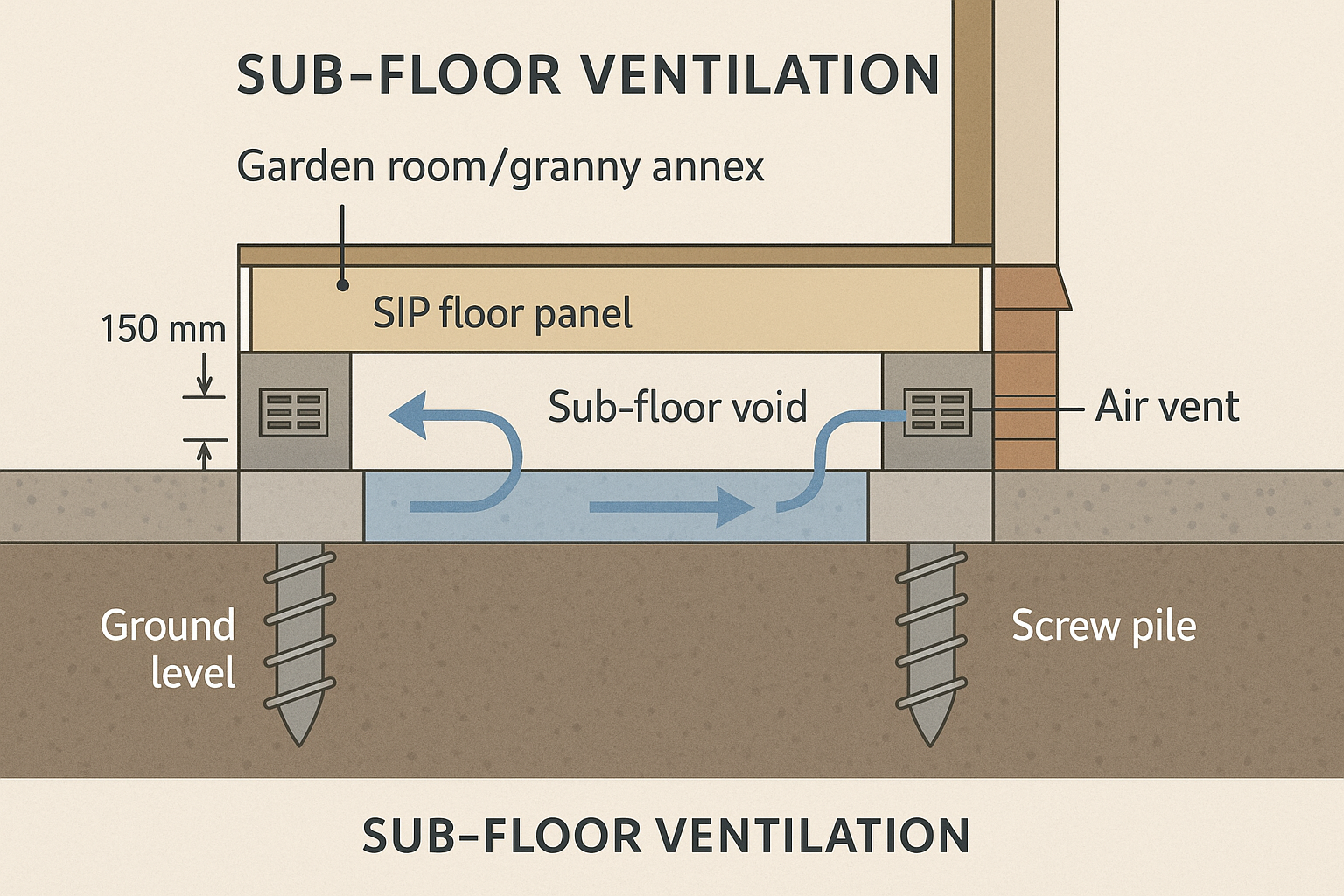
Learn why Building Control needs ventilation under SIP garden rooms on screw piles. TRJ Construction explains airflow, moisture, and regulation compliance.
granny annexe vs. care home
by Constantin Tiseanu 26 October 2025
Compare the benefits of a granny annexe vs a care home. Discover how TRJ Construction Ltd designs energy-efficient, accessible annexes that support family independence and long-term comfort.
ramp access on a granny annexe
by Constantin Tiseanu 26 October 2025
TRJ Construction designs accessible granny annexes with ramps, wide doors, and safety features for comfort and independence.
by Constantin Tiseanu 24 October 2025
Introduction Granny annexes are rapidly becoming one of the most sought-after home improvements in the UK. Whether you're creating a comfortable space for aging parents, accommodating adult children, or adding valuable rental income to your property, a well-designed granny annexe offers flexibility, independence, and significant property value enhancement. With multi-generational living on the rise and UK house prices continuing to climb, more homeowners are discovering that building a granny annexe is not just practical—it's a smart investment. But where do you start? This comprehensive guide walks you through everything you need to know about planning, designing, and building a granny annexe in 2025. Why Granny Annexes Are Trending in 2025 The demand for granny annexes has surged for several compelling reasons: Multi-Generational Living: Families are increasingly choosing to live closer together, providing support for elderly parents while maintaining independence and privacy for everyone. Property Value: A quality granny annexe can add 20-30% to your property's value, making it an excellent return on investment. Rental Income: Many homeowners use granny annexes as rental properties, generating steady income that can help with mortgage payments or retirement savings. Aging in Place: Rather than moving to care facilities, elderly parents can stay close to family while maintaining their independence in a purpose-built, accessible space. Home Office Evolution: Some families initially build annexes as home offices or creative studios, with the flexibility to convert them later. Planning Permission and Building Control: What You Need to Know One of the first questions homeowners ask is: "Do I need planning permission?" Permitted Development Rights: In many cases, granny annexes fall under permitted development rights, meaning you may not need full planning permission if your annexe meets specific criteria: • The annexe is within your property boundary • It doesn't exceed 50% of the land around your original house • Maximum height restrictions apply (2.5m for annexes within 2m of a boundary, 4m elsewhere) • The building is single-storey • It's used in connection with the main dwelling (not as an independent dwelling) When You Need Planning Permission: • If your property is in a conservation area or listed building • If the annexe will be used as a completely separate dwelling with its own utilities • If your site has had previous extensions that used up permitted development rights Building Control is Always Required: Even if you don't need planning permission, you must comply with building regulations. This includes: • Structural stability • Fire safety • Insulation and energy efficiency standards • Drainage and ventilation • Electrical and plumbing safety Pro Tip: Work with an experienced construction company that handles building control submissions—it will save you time, stress, and potential costly mistakes. Modern Construction Methods: SIP Panels vs Traditional Build The construction method you choose significantly impacts your annexe's energy efficiency, build time, and overall cost. SIP (Structural Insulated Panel) Construction: SIP construction has revolutionized granny annexe building. These foam-injected panels offer exceptional benefits: Advantages: • Superior Insulation: SIP panels provide significantly better thermal performance than traditional builds, reducing heating costs by up to 60% • Faster Build Time: A SIP annexe can be weathertight in days rather than weeks • Precision Engineering: Panels are manufactured to exact specifications, ensuring perfect fit and minimal waste • Airtight Construction: Dramatically reduces heat loss and improves comfort • Year-Round Comfort: Stays warm in winter, cool in summer Traditional Brick and Block Construction: Traditional methods remain popular and offer their own advantages: Advantages: • Familiarity: Many builders are experienced with traditional techniques • Aesthetic Match: Easier to match existing property appearance • Flexibility: Changes can be made more easily during construction • Perception: Some homeowners prefer the "solid" feel of brick Our Recommendation: For granny annexes, SIP construction offers the best balance of energy efficiency, build speed, and cost-effectiveness. The superior insulation is particularly important for elderly occupants who need consistent, comfortable temperatures. Real Project Example: Our Cheshunt Granny Annexe To illustrate what's possible, here's a recent project we completed in Cheshunt, Hertfordshire: Project Overview: • Modern self-contained granny annexes using SIP construction • Screw pile foundations (minimal ground disturbance) • Composite cladding with K render finish • Fully equipped with kitchenette, bathroom, and air conditioning • Full building control compliance achieved Timeline: Completed within agreed schedule Result: A warm, energy-efficient, self-contained living space that exceeded the client's expectations The client told us: "I couldn't be happier with the Granny Annex and it has far exceeded my expectations! From the initial planning stage right through to the day I got the keys Costi and his team were there." Cost Breakdown: What to Budget Granny annexe costs vary based on size, specification, and construction method, but here's a realistic UK budget guide for 2025: Basic Granny Annexe (20-30m²): • Budget Range: £40,000 - £60,000 • Includes: Basic kitchen, bathroom, living/sleeping area • Construction: Standard insulation, basic finishes Mid-Range Granny Annexe (30-40m²): • Budget Range: £60,000 - £90,000 • Includes: Full kitchen, separate bathroom, bedroom, living area • Construction: SIP panels, quality finishes, good insulation High-Specification Granny Annexe (40-50m²): • Budget Range: £90,000 - £120,000+ • Includes: Luxury fittings, underfloor heating, air conditioning • Construction: Premium SIP construction, designer finishes Additional Costs to Consider: • Professional fees (architect, structural engineer): £2,000 - £5,000 • Building control fees: £500 - £1,500 • Utility connections: £1,000 - £5,000 • Landscaping and access: £2,000 - £8,000 Design Considerations for Comfort and Accessibility A granny annexes should prioritize comfort, safety, and accessibility: Layout Essentials: • Open Plan: Maximizes space and ease of movement • Level Access: No steps between rooms or to entrances • Wide Doorways: Minimum 800mm for wheelchair access • Wet Room: Safer than traditional bathrooms, with level access shower Heating and Ventilation: • Underfloor heating provides even warmth without radiators • Mechanical ventilation with heat recovery (MVHR) ensures fresh air • Air conditioning for summer comfort (especially important for elderly) Safety Features: • Non-slip flooring throughout • Adequate lighting (especially at night) • Emergency call system linking to main house • Grab rails in bathroom • Level threshold entrances Future-Proofing: • Design for potential mobility aids • Install extra electrical sockets at accessible heights • Consider wider spaces for future wheelchair use Key Takeaways Building a granny annexes is a rewarding project that enhances your property, provides valuable living space, and supports multi-generational family life. Here's what to remember: 1. Check Planning Requirements Early: Understand permitted development rights and building control requirements before you start 2. Choose Modern Construction: SIP construction offers superior energy efficiency and faster build times 3. Budget Realistically: Factor in all costs including professional fees and utilities 4. Prioritize Accessibility: Design for current and future mobility needs 5. Work with Experienced Professionals: A specialist construction company will navigate regulations and deliver quality results With careful planning, the right construction partner, and attention to design details, your granny annexes can become a beautiful, functional space that serves your family for generations to come. With over 25 years of experience in the UK construction industry, TRJ Construction delivers quality projects across Hertfordshire and beyond. For more information about granny annexes construction or to discuss your project, contact us costi@trj-construction.co.uk or call +44 7966 800519.
office garden room
by Constantin Tiseanu 20 October 2025
Learn how to select the ideal SIP panel thickness for your garden room or home extension. TRJ Construction explains the balance between structure, insulation, and cost.