Understanding SIPs Beyond the Marketing
Understanding SIPs Beyond the Marketing

A Structural Insulated Panel (SIP) is often described very simply:
- Two structural OSB boards
- Bonded to a rigid insulation core
Technically, that description is correct.
But it is incomplete.
Because a SIP panel is not just “insulation sandwiched between boards.”
It is a composite structural system.
A SIP Panel Is a Structural Element
To understand SIPs properly, you need to think in structural terms.
A SIP behaves much like an engineered I-beam:
- The OSB skins act as the flanges
- The insulated core acts as the web
- The bond between them allows the panel to act as one unified element
When load is applied, the stresses are distributed across the entire surface of the panel — not concentrated at individual studs.
This is fundamentally different from traditional timber frame construction, where:
- Vertical studs carry the structural load
- Insulation is installed separately between those studs
- Performance depends on multiple individual components working together
With SIPs, the structure and insulation are integrated.
They are engineered together from the start.
Structure + Insulation: One System
In traditional construction, insulation is often something that gets “added in.”
In SIP construction, performance is built in from the beginning.
Because:
- The insulation core is continuous
- Thermal bridging is significantly reduced
- Structural rigidity comes from the composite action of the full panel
This integration delivers more than just thermal efficiency. It delivers:
- Improved structural stability
- Cleaner internal spans
- Faster installation
- Greater consistency in performance
When properly designed and installed, SIPs provide both load-bearing strength and high thermal performance in a single manufacturing process.
Why This Distinction Matters
Many garden buildings on the market are described as “SIP buildings.”
But not all SIP specifications are equal.
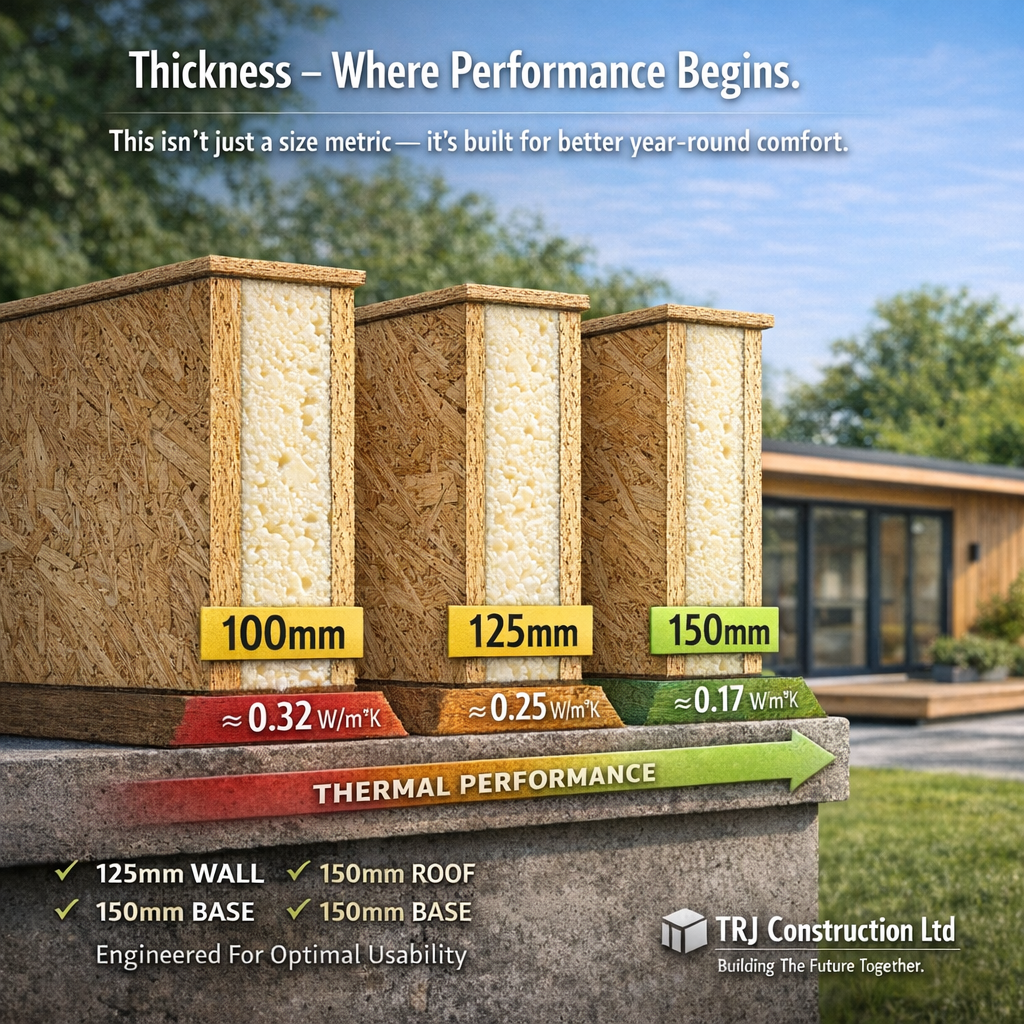
Thickness matters.
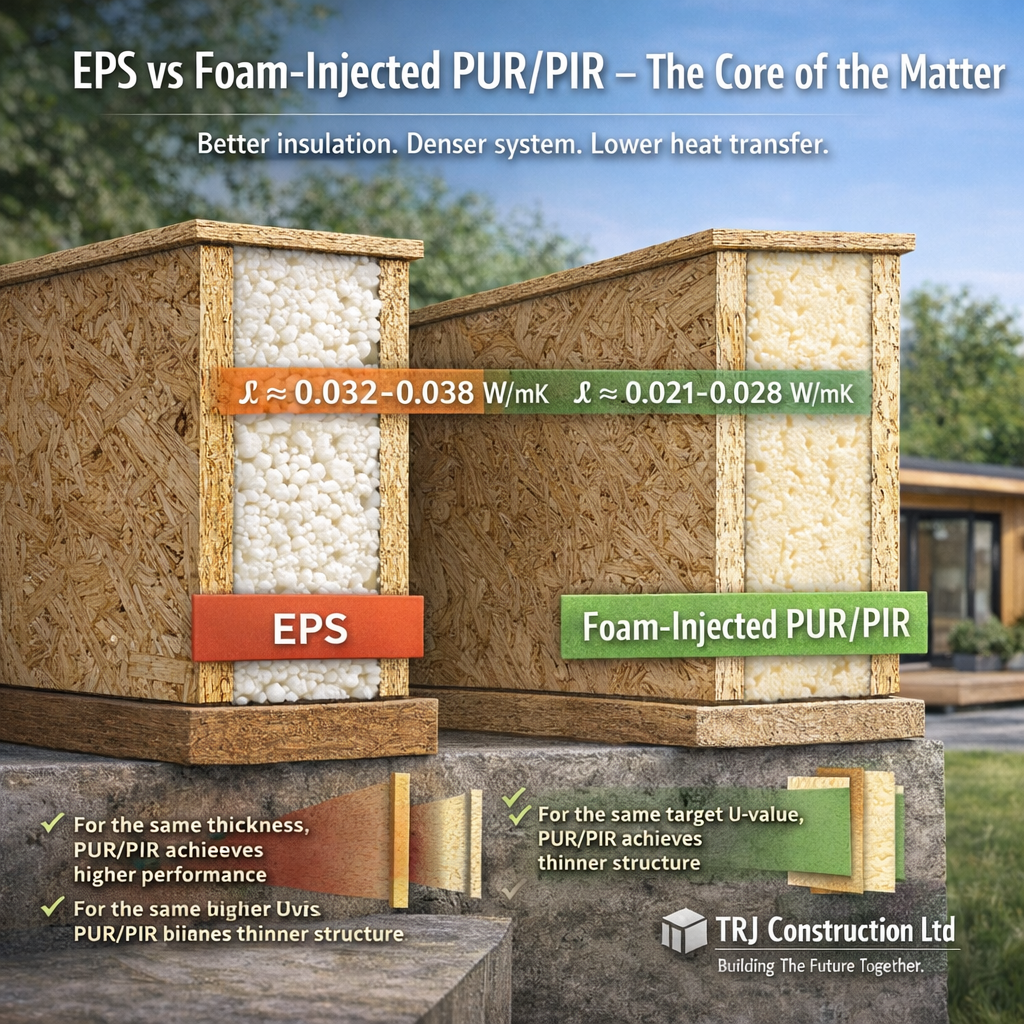
Core type matters.
Joint detailing matters.
Installation discipline matters.
A panel may look similar on paper — but the engineering behind it determines how it performs over time.
That performance affects:
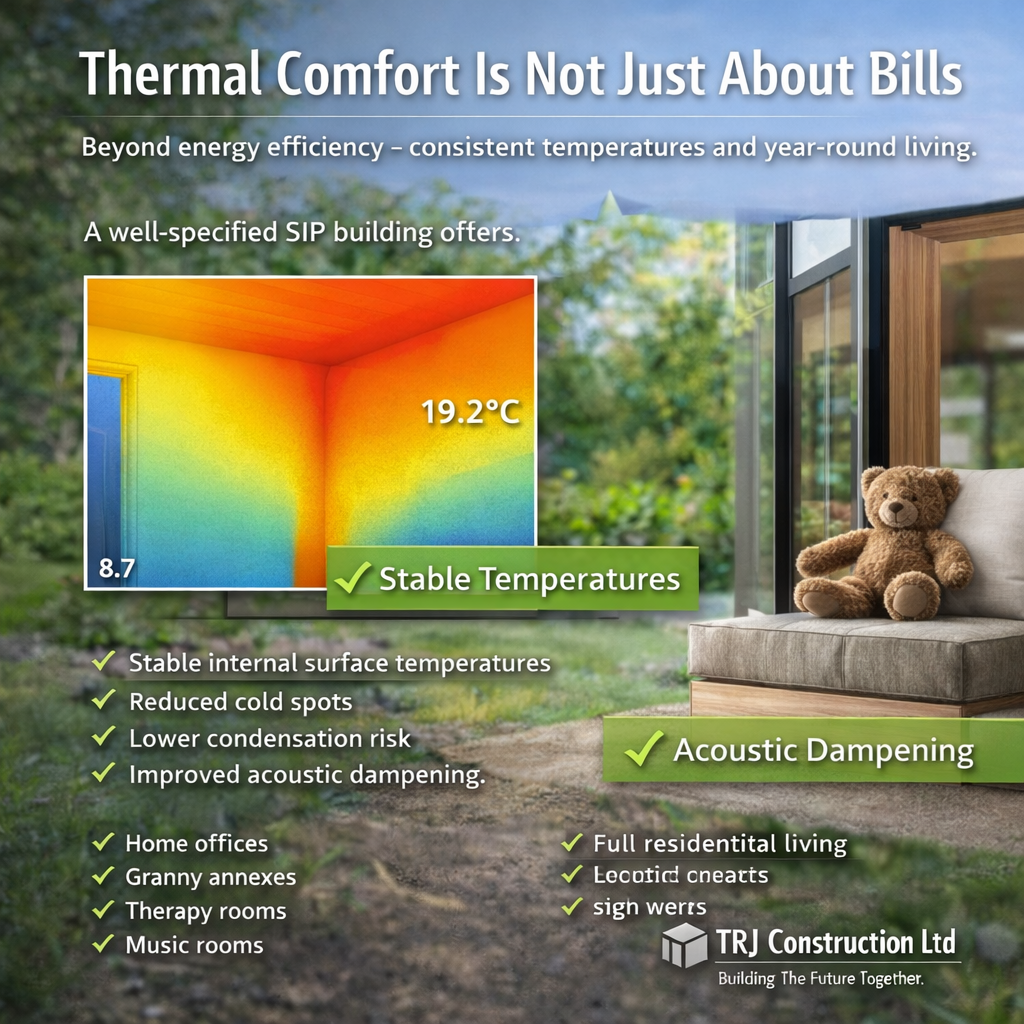
- Winter comfort
- Energy stability
- Long-term movement
- Durability of finishes
- Overall structural integrity
How We Approach SIP Construction at TRJ Construction Ltd
At TRJ Construction Ltd, we do not treat SIPs as just another building material.
We approach them as a structural system first — and a garden building second.
That means:
- Specification decisions are made with long-term performance in mind
- Structural integrity is prioritised alongside thermal efficiency
- Detailing is considered part of the engineering — not an afterthought
Because when the structural envelope is correct, everything else follows.
Comfort.
Stability.
Longevity.
SIPs are not simply about insulation.
They are about engineered living space.