How to Choose the Right SIP Panel Thickness for Your Extension
Understanding structural performance, insulation values, and best options for garden rooms, extensions, and annexes.

When planning a garden annexe or home extension with SIP panels, one of the most common questions we receive is: “What thickness should I choose?” The answer depends on how the building will be used, where it’s located, and what energy performance you want to achieve.
At TRJ Construction, we’ve been working with SIPs since 2001 — long before most of the industry discovered them — and we know how each panel thickness performs in real-world conditions.
1️⃣ The Standard SIP Sizes
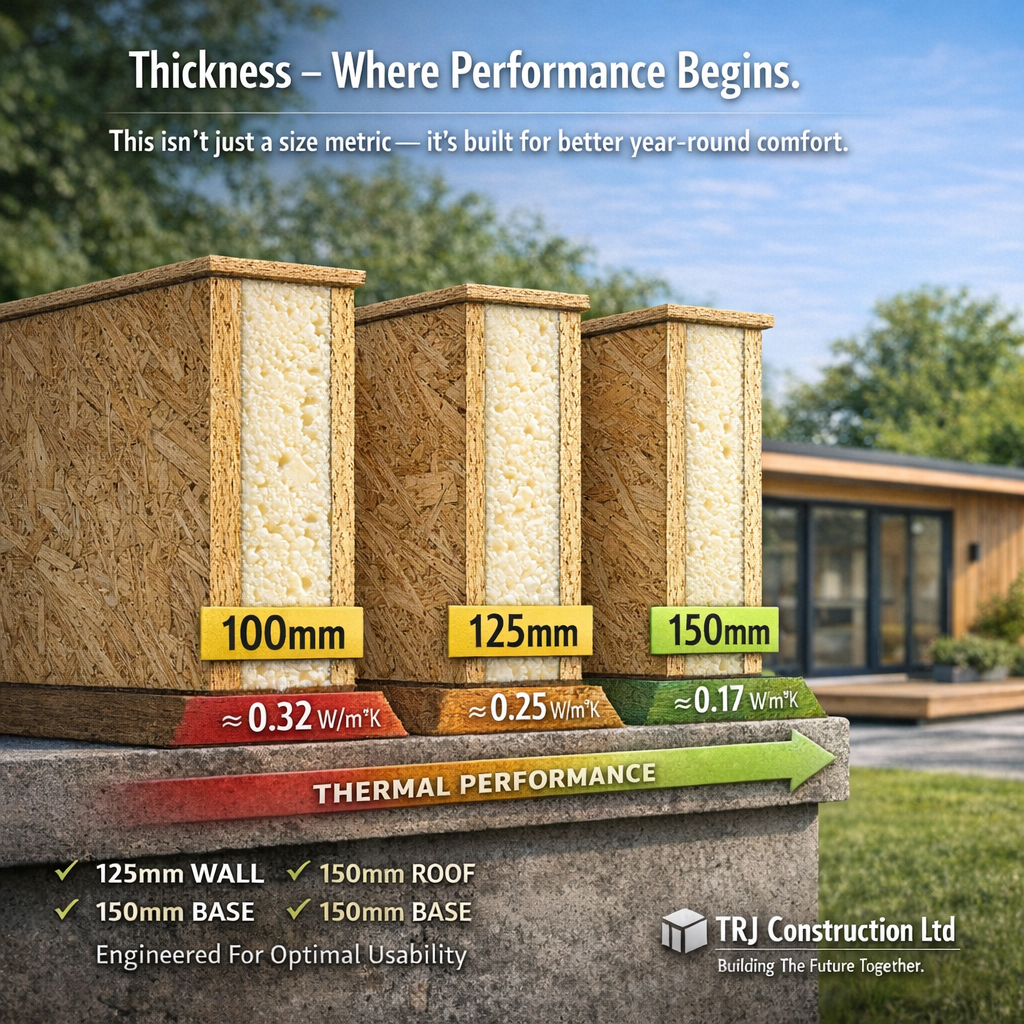
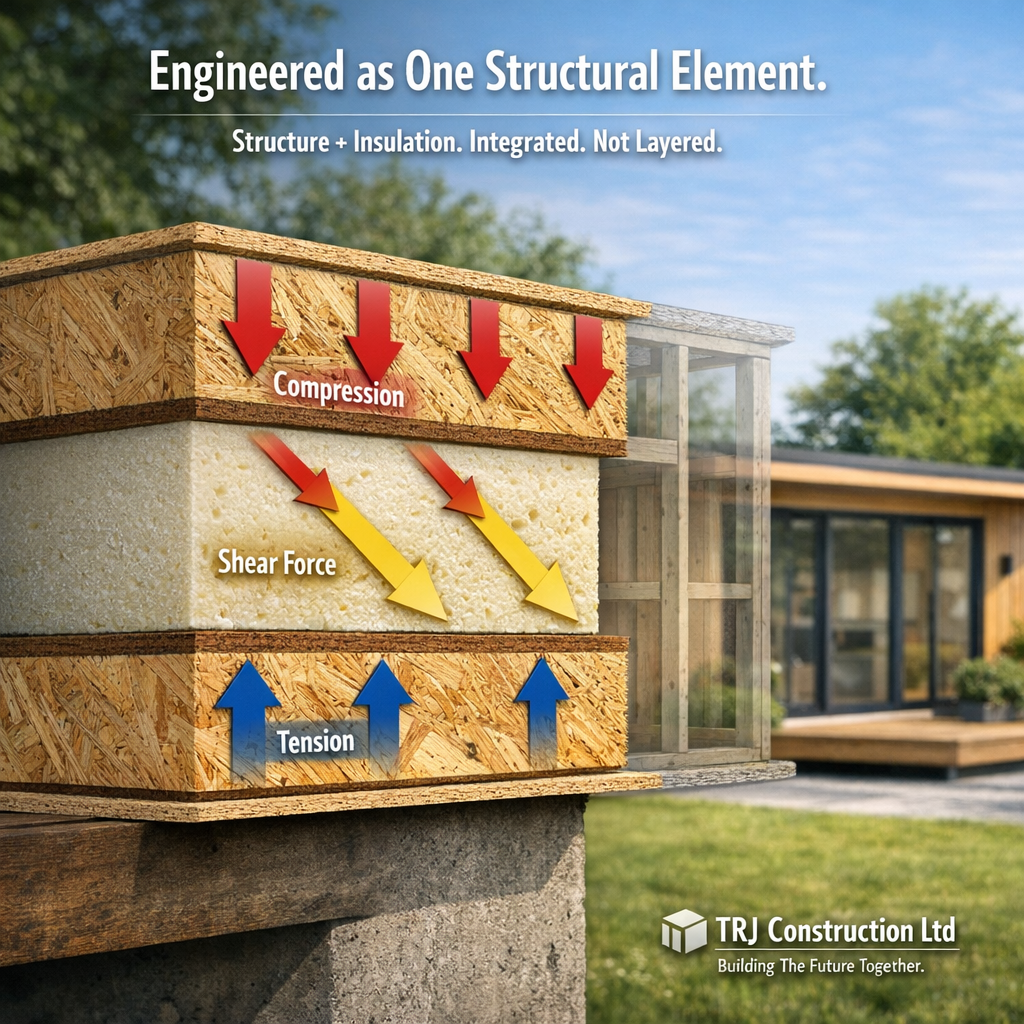
Typical SIP panels come in 100 mm, 125 mm, and 150 mm thicknesses. Each has two structural facings and an insulating foam core.
- 100 mm panels are ideal for small, unheated garden offices or studios.
- 125 mm panels are the most common for year-round annexes or extensions, balancing strength and insulation.
- 150 mm panels provide exceptional U-values and are used when top-tier thermal performance or multi-storey structures are required.
2️⃣ Thermal Performance (U-Values)
U-values measure how well a wall prevents heat loss. The thicker the insulation, the lower the U-value — and the warmer your building stays.
A typical
150 mm foam-injected SIP achieves around
0.18 W/m²K, outperforming traditional timber or block methods.
3️⃣ Structural Integrity
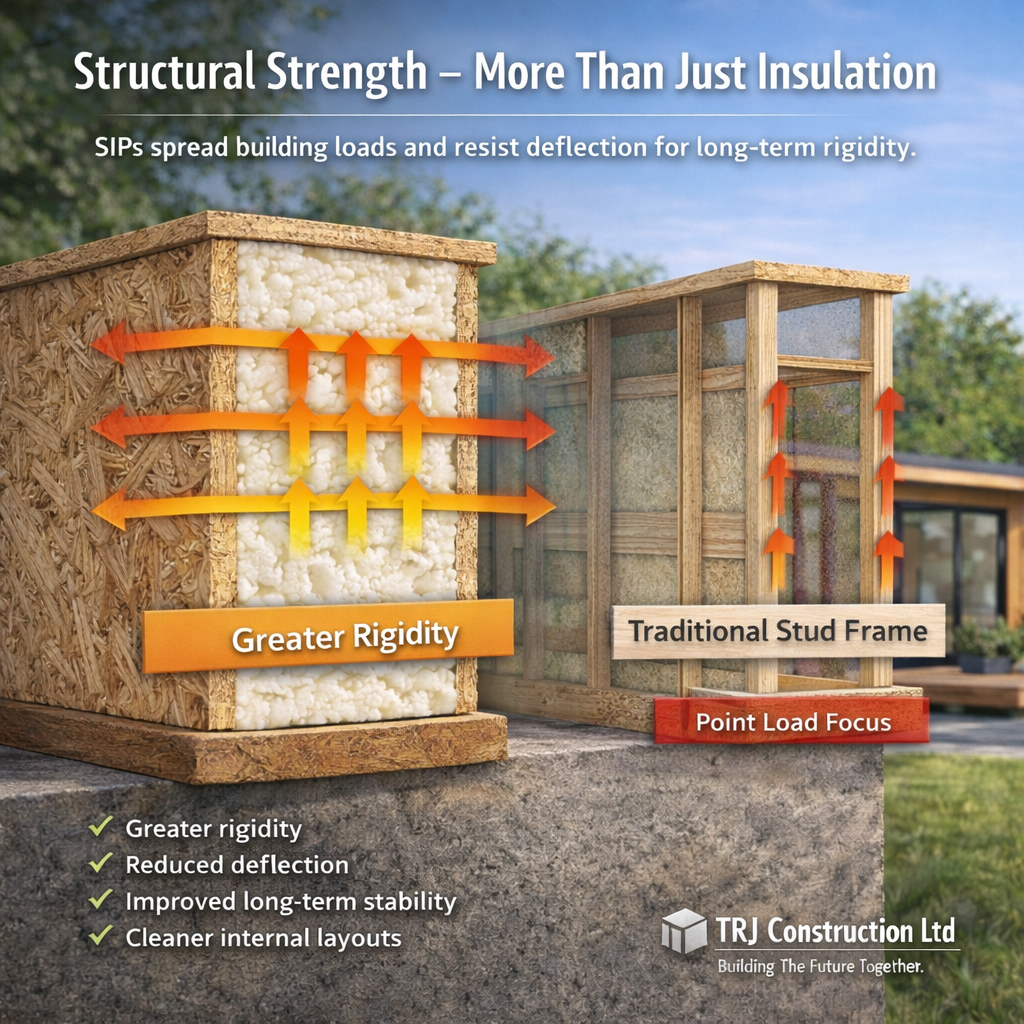
Panel thickness also affects rigidity. In larger spans or open-plan designs, thicker SIPs reduce the need for extra framing, keeping interiors cleaner and more efficient.
4️⃣ Cost vs Efficiency
While thicker panels cost slightly more, they save on long-term heating bills. TRJ clients often see the extra investment pay for itself within the first few winters.
5️⃣ Our Expert Recommendation
For most
granny annexes and modular extensions, TRJ recommends
150mm foam-injected SIPs — perfect balance between structure and comfort.
For more complex projects, our design team can mix panel sizes: e.g. 150 mm for the roof and 125 mm for walls, optimizing performance without unnecessary cost.
In summary: panel thickness isn’t just a number — it’s a design decision that shapes comfort, efficiency, and durability. And with TRJ Construction’s experience, you’ll always get the right combination for your project.